--- Background ---
American Culture in the 1950s
The Postwar Years
Much of American culture in the 1950s was a direct response to the upheaval and disruption of World War II (American involvement 1941-1945). The war effort had united much of the country in rationing practices and war bond purchases, but at its end, the United States experienced remarkable economic expansion, laying the cultural foundation of capitalism and excess for the era.
Suburban growth surged under the GI Bill and mass-produced tract housing, with Levittown, New York, establishing the archetype. By 1960, homeownership had reached almost 62%, and by 1955, the automotive industry was producing more than four times as many vehicles as it had a decade before. An underlying societal pressure evolved to keep up with the material indicators of prosperity and an image solidified of respectable American life, which almost exclusively centered the White experience. Despite the revelatory consumerism, Cold War tensions brewed, and anti-communist hysteria encouraged a culture of conformity, hyper-patriotism, and suspicion.
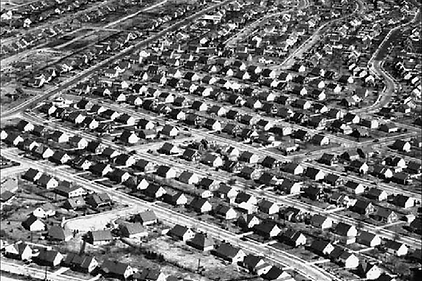
Levittown, New York, featuring what are sometimes referred to as "cookie-cutter" houses due to their identical nature

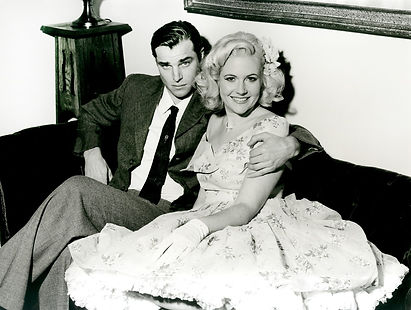
Top: An idealized morning scene from the 1950s
Bottom: Even clothing and style communicated strong differences between men and women
The Eisenhower Era
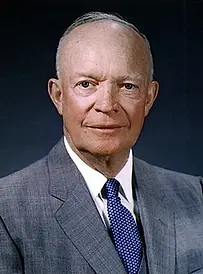
Under President Dwight D. Eisenhower (in office from 1953-1961), this environment of prosperity and conformity became institutionalized. Economic growth, expansive infrastructure, and consumer affluence marked his administration. The Federal-Highway Act of 1956 inaugurated the Interstate Highway System, reshaping urban planning and commuting possibilities across the nation. This period solidified a very specific vision of the American Dream — homeownership in the suburbs, a car, the best and latest consumer goods, and upward mobility enabled by GI Bill benefits. Yet this dream, while tangible for some, masked widespread racial exclusion and uneven access to opportunity
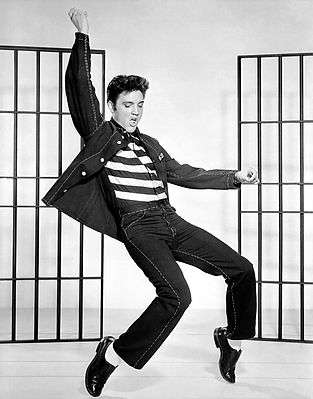
Elvis Presley dancing in his 1957 recorded performance of "Jailhouse Rock"
Gender Roles
During this period, traditional gender roles were strongly reasserted, a direct reaction to wartime disruptions. Sociologist Elaine Tyler May termed the expectation "domestic containment," as women were encouraged (and often pressured) to relinquish wartime employment for homemaking and motherhood. By the late 1950s, women comprised only 38% of college students, a notable decline from earlier decades. The image of the "happy homemaker" prevailed, reinforced by media and the ever-present Cold War surveillance culture.
While women were encouraged towards domesticity, men were steered towards an equally rigid model of masculinity, often rooted in Cold War anxieties. Historian K. A. Cuordileone notes that political and cultural discourse in the 1950s equated toughness and assertiveness with patriotism, while emotional vulnerability was framed as weakness or even a sign of ideological "softness." In the corporate sphere, the "organization man" embodied loyalty, conformity, and professional ambition, yet this role demanded the suppression of individuality and emotional expression. This fostered what Michael Kimmel later described as "masculinity as homophobia," a constant fear of being perceived as insufficiently manly. Indeed, any subversion of the prescribed gender expression could be perceived as homosexuality, which was criminalized and discriminated against in the majority of the country through sodomy laws and pure prejudice.
This culture reinforced the breadwinner ideal, placing the burdens of wage-earning and stoic leadership on men, often to the detriment of their mental health and personal relationships. Such ideals were perpetuated in advertising, television, and politics, creating an environment in which men and women alike policed gender boundaries.
(3)_jpg.webp)
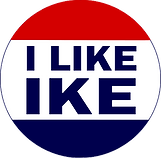
Dwight D. Eisenhower, 34th President of the United States, and a popular slogan from his 1952 campaign
Emerging Counterculture
Even against a backdrop of homogeneity, a vibrant undercurrent of cultural change began to appear. Sociologists described Americans as increasingly “"other-directed," shaped by group norms and mass media. Television became central to family life, reinforcing suburban domestic ideals.
Simultaneously, the Beat Generation, epitomized by Jack Kerouac’s On the Road and Allen Ginsberg’s Howl, pushed against norms through spontaneous, anti-establishment literature. Rock 'n' roll, led by icons such as Elvis Presley, brought African-American musical styles into mainstream culture, unsettling older generations. The rise of mass media, fast food, automobile-centered leisure, and youth subculture hinted at the broader social upheavals to come in the next decade.
Immigration in the United States:
From Independence to Post-World War II
Who is American?
The early U.S. constitutional and legislative framework created a racialized and exclusionary definition of citizenship. The Constitution recognized three groups: Native Americans, excluded as members of independent nations; enslaved individuals, labeled "other persons"; and the "People," who alone held full citizenship rights. Building on this, the Naturalization Act of 1790 limited citizenship to "free white persons" born abroad, while allowing most white immigrants to naturalize, with few exceptions. These laws established whiteness as central to American identity and set the precedent for a racially structured immigration system.
Immigration in a Young Nation
In the burgeoning United States, immigration was shaped by both legal restrictions and political suspicion. Under the Adams Administration, the Naturalization Act of 1798 increased the residency requirement for citizenship from five to fourteen years, while the Alien Friends Act allowed the president to deport non-citizens deemed dangerous, and the Alien Enemies Act codified similar powers during times of conflict. The Sedition Act criminalized criticism of the government, targeting immigrants assumed to support Jeffersonian Republicans, a period Jefferson called a "reign of witches." These laws reflect an early American tension: Immigrants were needed for labor and civic life, but were often viewed as politically and socially suspect.
By the antebellum period, nativist movements like the Know-Nothing Party opposed immigration and Catholic influence. Despite discrimination against Irish immigrants in work, housing, and education, European immigrants largely retained the rights of white citizens. Free Black workers were often displaced by newcomers, while white male immigrants could vote soon after arrival, sometimes even before naturalization.
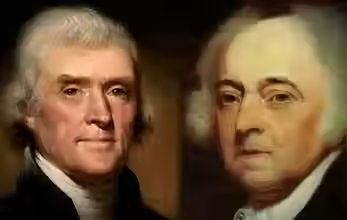
Thomas Jefferson (3rd President of the United States) and John Adams (2nd President of the United States), responsible for much of early American policy on immigration
The Progressive Era: Immigration to the Urban U.S.
Immigration during the Progressive Era transformed the cultural and economic fabric of American cities. Between 1901 and 1914, nearly 13 million immigrants entered the United States, part of a wider global movement driven by industrial growth and the decline of traditional agriculture. By 1910, more than 40% of New York City’s population was foreign-born, with similarly high numbers in Chicago, Milwaukee, and San Francisco. Most immigrants came from southern and eastern Europe (particularly Italy, Austria-Hungary, and Russia) while smaller groups arrived from Mexico and Japan. Many settled in tight-knit ethnic neighborhoods, where churches and shared traditions provided stability, though a significant number were "birds of passage" who hoped to earn money and return home. Processing centers like Ellis Island and Angel Island became symbols of this mass migration, as people fled poverty, political unrest, and high taxes abroad while seeking opportunity in America’s factories, mines, and fields.
These opportunities, however, were marked by harsh realities of inequality and discrimination. Immigrants were largely restricted to low-paying, unskilled, and dangerous jobs, while immigrant women in particular had few options beyond exhausting garment and factory work, unlike many American-born women who began entering clerical and professional roles. The 1911 Triangle Shirtwaist Fire, which killed mostly Jewish and Italian women workers, exposed the deadly risks of such labor and sparked calls for reform. In overcrowded tenements, families often lived without electricity or indoor plumbing, even as the wealth of financiers like J. P. Morgan highlighted the extremes of class division. Generational divides also emerged, as American-born children often adapted more quickly to U.S. culture than their immigrant parents. This era of immigration was shaped by both new possibilities and deep social tensions, reflecting ongoing struggles over labor, class, and identity in a rapidly changing nation.
Eugenics in World War I
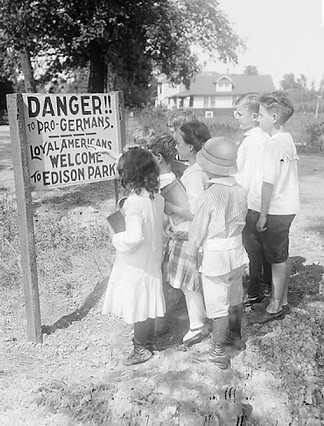
During the First World War (then known then as the Great War), U.S. attitudees towards immigration were shaped by nationalism and the rise of eugenics, a pseudo-science that claimed human groups could be improved through selective breeding. These ideas cast immigrants as biologically inferior and a threat to the nation. The U.S. Immigration Commission’s 1911 Dictionary of Races of Peoples ranked forty-five "races," placing Anglo-Saxons at the top and Southern Italians at the bottom, while Madison Grant’s The Passing of the Great Race (1916) warned that immigration endangered American civilization. Such thinking justified coercive measures including forced assimilation, sterilization, and deportation. Federal authorities demanded demonstrations of loyalty, such as the 1918 Loyalty Day parade in New York City, while suspicion of "enemy aliens" led to hostility toward German immigrants, who anglicized food names and concealed their ancestry. In this way, wartime immigration policy fused patriotism with pseudoscience, reinforcing racial hierarchies and narrowing the boundaries of national belonging.
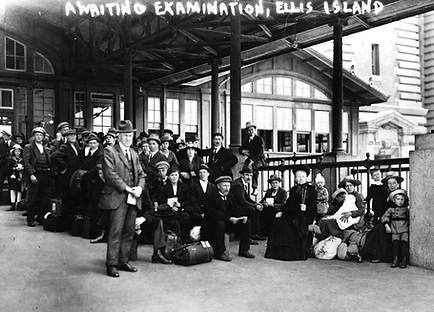
Immigrants in line for "examination" at Ellis Island
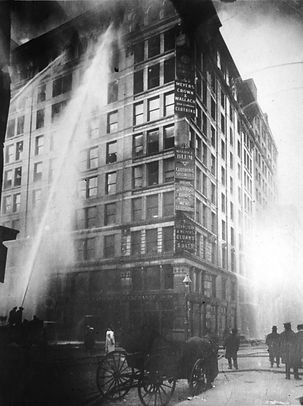
The Triangle Shirtwaist Factory Fire on March 25, 1911
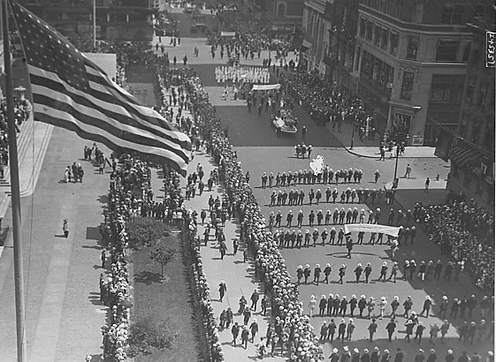
The Loyalty Parade in New York City on July 4, 1918, meant to demonstrate how loyal immigrants were to the U.S. (rather than the nations they were from, which were potentially involved in the war)
Children read a xenophobic sign during World War I's heightened anti-German sentiment
Discrimination & Resistance During the Interwar Period and World War II
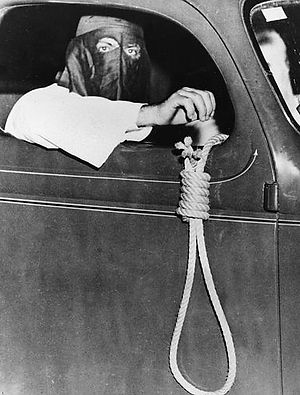
In the 1920s, American immigration policy and culture intensified exclusion. The push for "100 percent Americanism" led to citizenship programs, workplace campaigns, and investigations into immigrant households. Nativist hostility and hate groups like the Ku Klux Klan targeted Black, Jewish, and Catholic communities, while federal laws imposed sweeping restrictions. The Emergency Quota Act of 1921 and the Johnson-Reed Act of 1924 drastically cut immigration, barred nearly all Asians, and created the category of the "illegal alien" that endures as a controversial label even now.
Immigrant groups pushed back against this increasing discrimination. Organizations like the Anti-Defamation League and the National Catholic Welfare Council lobbied for equal treatment, and in Meyer v. Nebraska (1923), the Supreme Court defended the rights of non-English-speaking communities. Still, during the Great Depression, immigrants (especially Mexicans) were scapegoated for economic hardship and subjected to mass deportations. The era reinforced a view of immigrants as expendable workers rather than full members of society.
World War II brought a new approach called "patriotic assimilation." The government promoted unity through diversity, using films and pamphlets to highlight immigrant contributions. Many second-generation Americans embraced this message, with Italians and Jews in particular gaining wider acceptance. Yet these gains were not universal. Racial minorities, especially Japanese-Americans, Mexican-Americans, and African-Americans, continued to face exclusion and discrimination. The Japanese internment camps and events like the Harlem race riot of 1943 revealed that pluralism had clear limits.
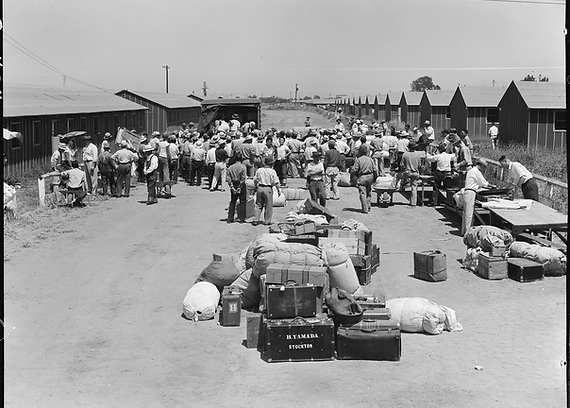
Arrivals at the Japanese internment camps of World War II, where roughly 120,000 Japanese Americans were detained on U.S. soil because of their heritage
A masked Ku Klux Klan member intimidates Black voters with a noose in 1939
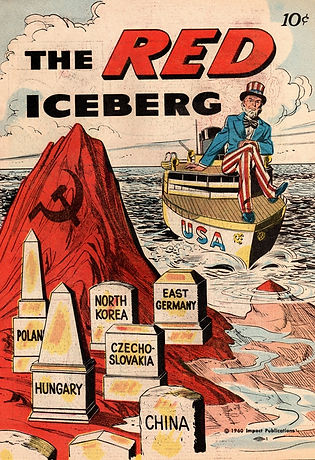
U.S. Cold War-era xenophobic propaganda
The 1950s: Cold War Conformity
Anti-immigrant sentiment during the midcentury was deeply shaped by Cold War anxieties and postwar social transformations (see American Culture in the 1950s section above). During this period, anticonformity was often equated with unpatriotism, placing immigrants (as well as queer communities) under heightened scrutiny.
The McCarran-Walter Act of 1952 institutionalized these fears by permitting the government to deport both naturalized citizens and noncitizens suspected of communist sympathies, significantly limiting the flexibility of immigration quotas and amplifying public anxiety towards newcomers.
Immigrants were increasingly perceived as potential threats to national security, and the political climate reinforced suspicion and social policing of nonconforming groups.
Not like the brazen giant of Greek fame,
With conquering limbs astride from land to land;
Here at our sea-washed, sunset gates shall stand
A mighty woman with a torch, whose flame
Is the imprisoned lightning, and her name
Mother of Exiles. From her beacon-hand
Glows world-wide welcome; her mild eyes command
The air-bridged harbor that twin cities frame.
“Keep, ancient lands, your storied pomp!” cries she
With silent lips. “Give me your tired, your poor,
Your huddled masses yearning to breathe free,
The wretched refuse of your teeming shore.
Send these, the homeless, tempest-tost to me,
I lift my lamp beside the golden door!”
("The New Colossus" by Emma Lazarus, inscribed in 1903 inside
the pedestal of the Statue of Liberty that greeted immigrants in the
New York harbor)
This Is America: Modern Immigration 1960-2025
Immigration Legislation in the U.S.Since the Midcentury
-
1965: Hart‑Celler Act abolishes quotas, prioritizes family reunification and skills
-
1986: Immigration Reform and Control Act (IRCA) legalizes ~3 million undocumented immigrants; penalizes employers
-
1996: Illegal Immigration Reform and Immigrant Responsibility Act (IIRIRA) expands deportation grounds, limits due process
-
2001: USA PATRIOT Act tightens immigration post‑9/11
-
2012: Deferred Action for Childhood Arrivals (DACA) policy created to defer deportation of undocumented individuals brought as children
-
2017-2021: Trump’s first term enacts travel bans, family separations, curbs on asylum, and expanded enforcement
-
2021-2024: Biden reverses many of Trump’s policies, expands Temporary Protected Status (TPS) program, and faces border processing challenges
Policies & Practices Enacted Since January 20, 2025
-
"Protecting the American People Against Invasion" Order (EO 14159): Declared an "invasion" at the southern border, expanded expedited removal, threatened to withhold federal funds from "sanctuary" jurisdictions
-
"Protecting the Meaning and Value of American Citizenship" Order (EO 14160): Sought to end birthright citizenship (blocked in courts)
-
Border Emergency (Proclamation 10886): Declared national emergency, expanded wall and troop deployment
-
Refugee Suspension (EO 14163): Halted refugee resettlement for 90 days
-
Laken Riley Act: Mandated detention of certain non-citizens, allowed states to sue federal government over enforcement
-
Proclamation 10949: Banned or restricted the entry of foreign nationals from 12 countries in the name of national-security and public-safety threats; suspension for Palestinian passports; new $250 "visa integrity fee,"; stricter visa limits
-
One Big Beautiful Bill Act: $170B for border/enforcement; asylum/remittance fees; penalties on immigrants; denial of tax credits and benefits to undocumented families
-
Ended or moved to terminate Temporary Protected Status (TPS) protections for large numbers of migrants, thereby placing them at risk of removal
-
Fast-Track Deportations: Expanded expedited removals (halted by courts)
-
AI Surveillance: DHS used social media monitoring to deny/revoke visas, targeting activists
-
Increased enforcement and crowd-control measures, including plans to build large migrant detention centers, use of military facilities/bases for detention, and sharper removal efforts
-
Directed ICE to intensify workforce-site raids
-
ICE remains unchecked as its masked agents forcibly take individuals into custody for interregations, detainment, and/or deportation, often right off of the street and into unmarked vans
-
Authorized ICE agents to use "whatever means is necessary" to protect themselves during enforcement operations, including arrests of protesters interfering with ICE operations